ChatGPT vs Claude: which is better for everyday tasks?
ChatGPT vs Claude on 5 everyday tasks: a tech site tested GPT-6 and Claude Opus 5.5, and Claude won 4. What it means for your job, plus a test to run yourself.
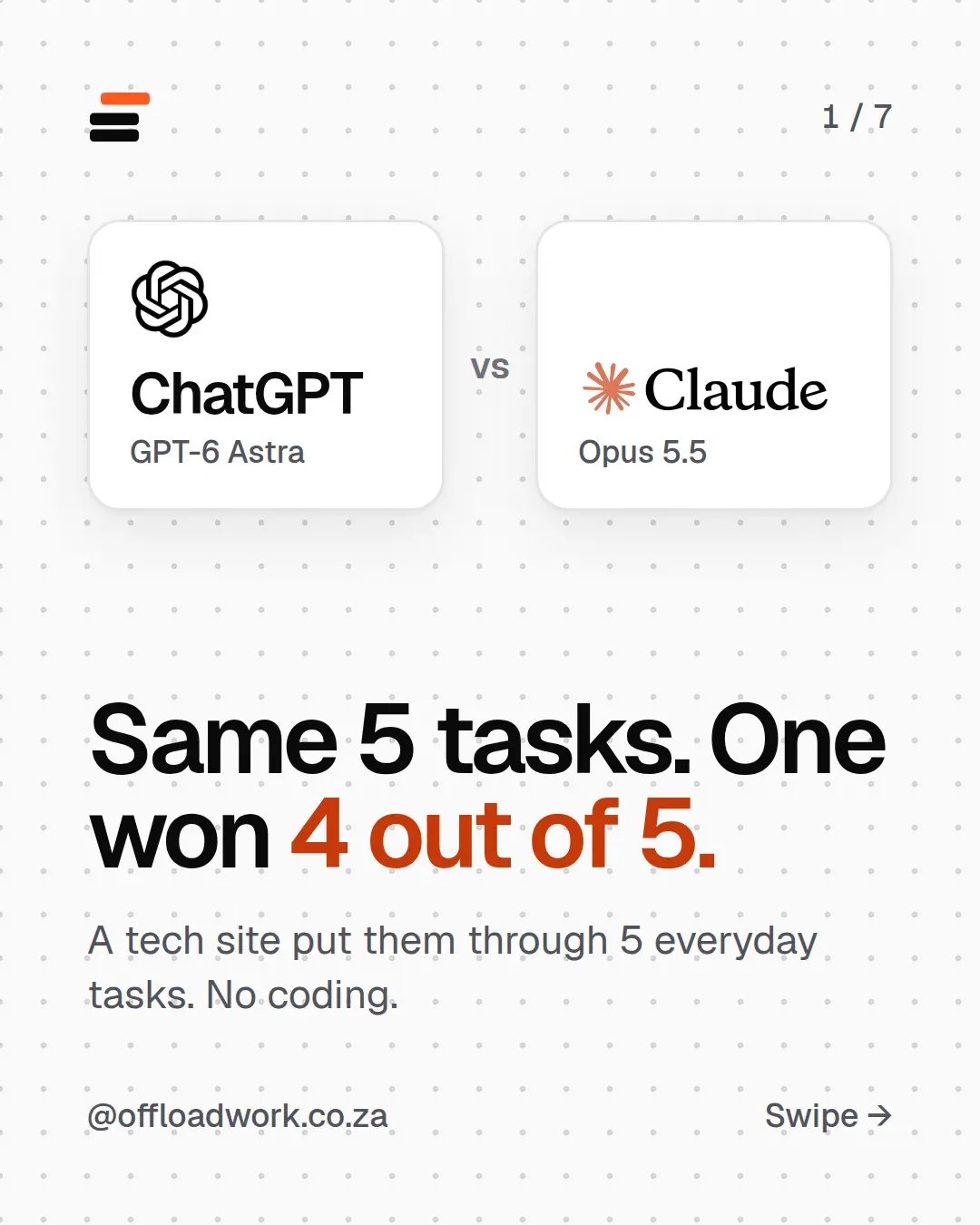
In a head-to-head test of ChatGPT vs Claude on five everyday tasks, Claude won four. It went deeper and noticed things nobody asked about. ChatGPT won once, on the task where a short, simple answer mattered more than a thorough one. So the better tool depends on the job, and the only test that counts is one task from your own week.
The test: 5 everyday tasks, nothing techy
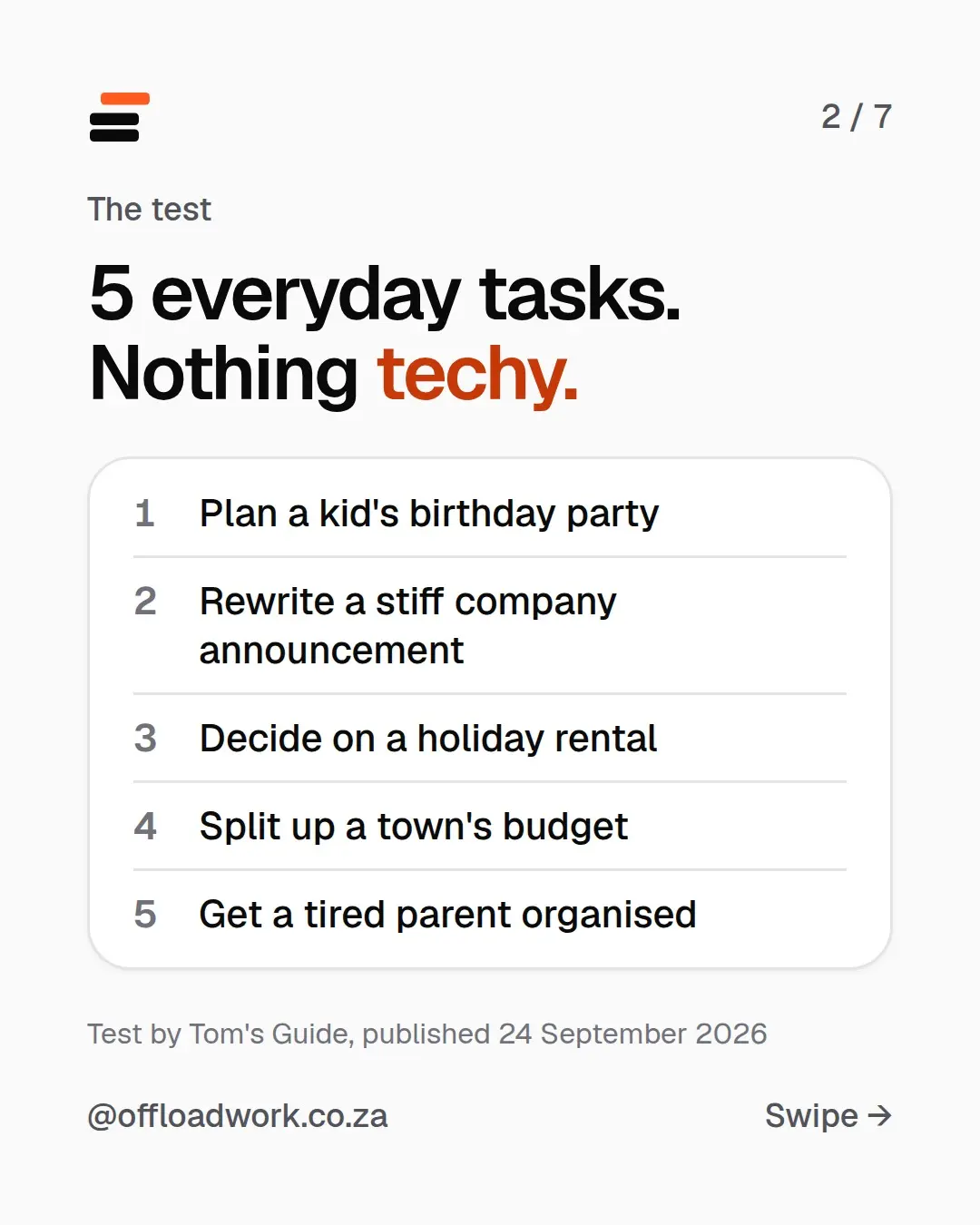
Tom’s Guide, a tech review site, ran the newest versions of both side by side: GPT-6 Astra in ChatGPT and Opus 5.5 in Claude. They skipped coding and benchmarks and used the kind of jobs normal people bring to AI:
- Plan a kid’s birthday party
- Rewrite a stiff company announcement
- Decide on a holiday rental
- Split up a town’s budget
- Get a tired parent organised
That list matters. Most “which AI is best” articles test maths puzzles and code. If your work happens in email, spreadsheets and meetings, a test like this tells you far more.
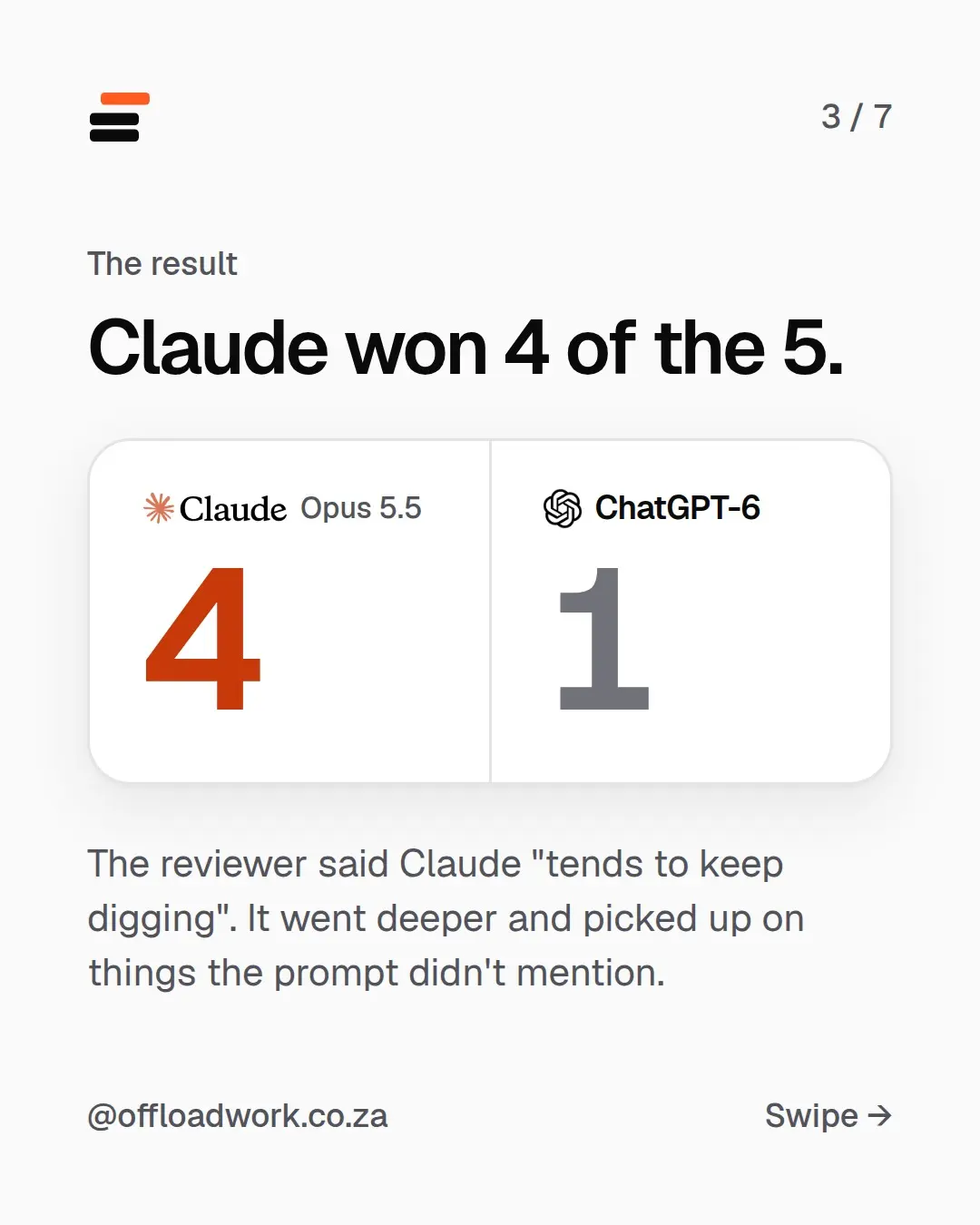
The result: Claude won 4 of the 5
Claude took the birthday party, the company announcement, the holiday rental and the town budget. The reviewer said Claude “tends to keep digging”: it went further into each task and picked up on things the prompt didn’t mention.
That’s the pattern to remember. When a job has hidden details (a budget with trade-offs, an announcement that has to land with different people, a rental choice with a catch in the small print), the tool that keeps digging finds them for you.
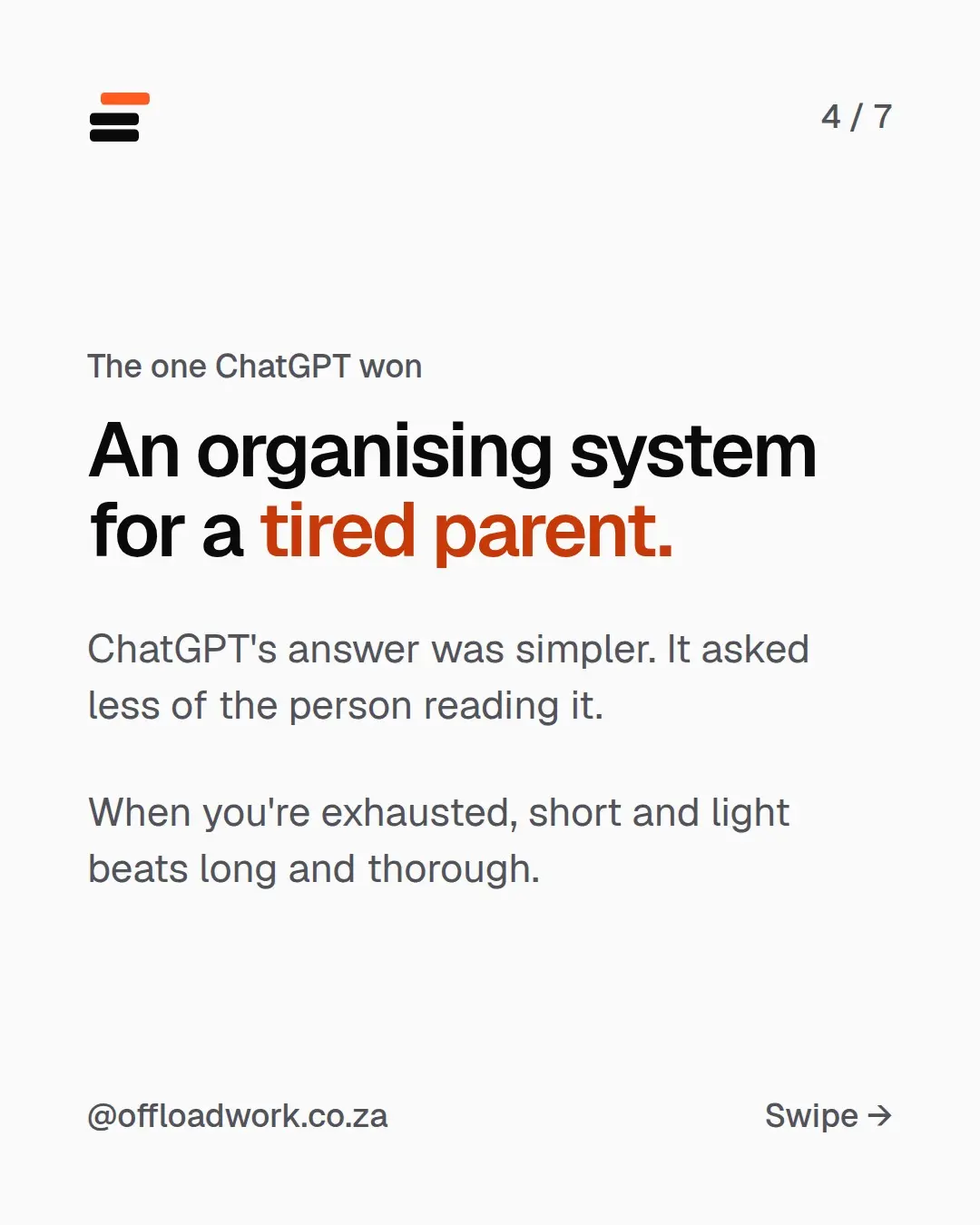
The one ChatGPT won: an organising system for a tired parent
ChatGPT’s answer was simpler. It asked less of the person reading it.
When you’re exhausted, a short plan you’ll actually follow beats a thorough one you won’t. ChatGPT read the situation, not just the request. That’s a real strength, and it’s why this isn’t a clean knockout.
Want a tested AI tip like this every week? The Offload newsletter is a two-minute email: one AI update explained, one workflow to try and one prompt to copy.
What it means for your job: deep or quick?
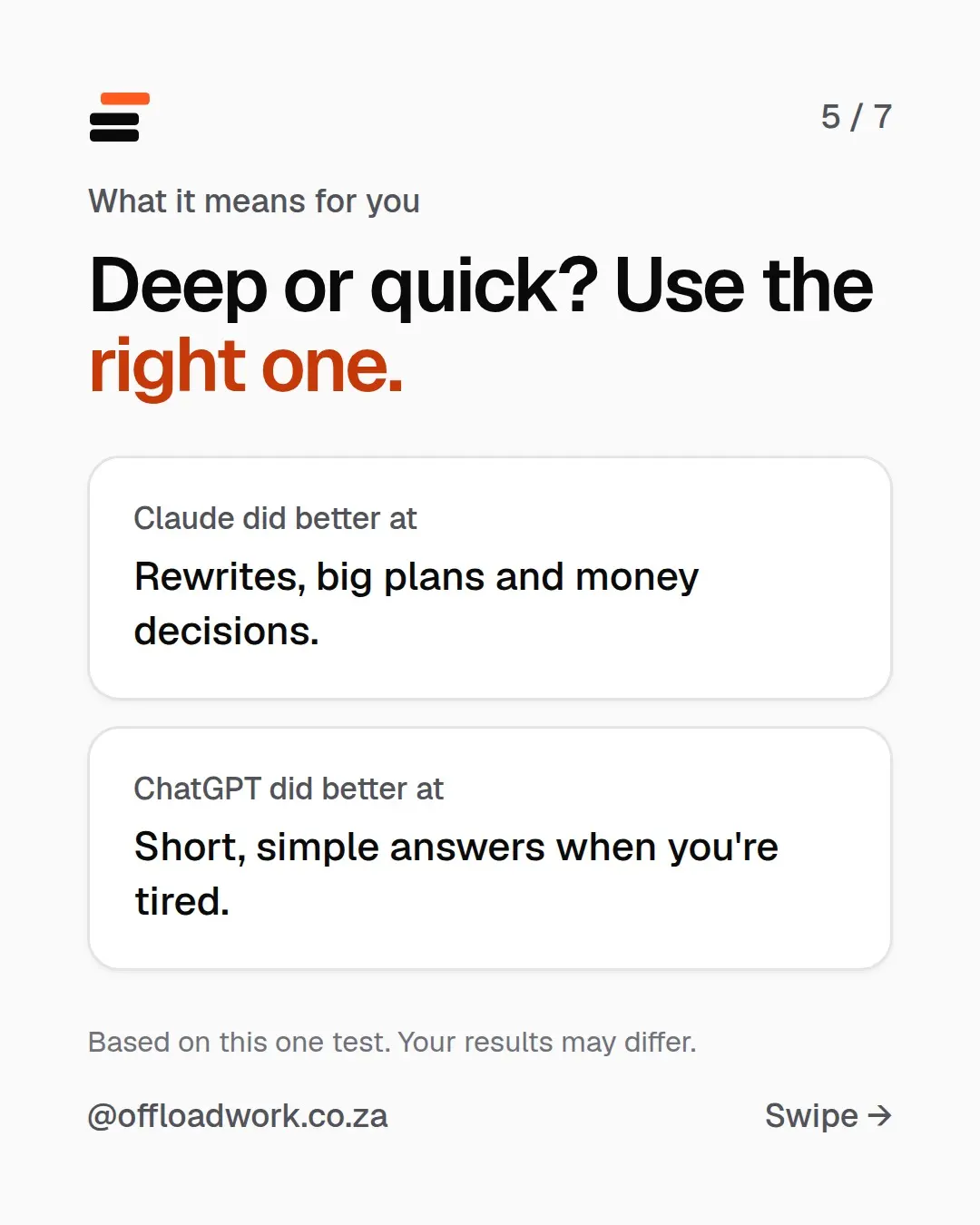
Here’s the practical split from this test:
| Claude did better at | ChatGPT did better at |
|---|---|
| Rewrites (announcements, stiff emails, policies) | Short, simple answers when you’re tired |
| Big plans with lots of moving parts | Quick checklists you’ll follow today |
| Money decisions with trade-offs | Answers that don’t ask much of you |
If most of your week is writing, planning or weighing up options, start with Claude. If you mostly want fast, light answers between meetings, ChatGPT may suit you better. Want the simpler answer from either one? Say so: “Keep it to 5 bullet points” works in both. How to write better prompts covers that in three small changes.
One honest caveat: this is one test. Your results may differ, and both tools change every few months. GPT-6 brought real changes for normal work, and Claude Opus 5.5 was built to write more like a person. The gap between them moves.
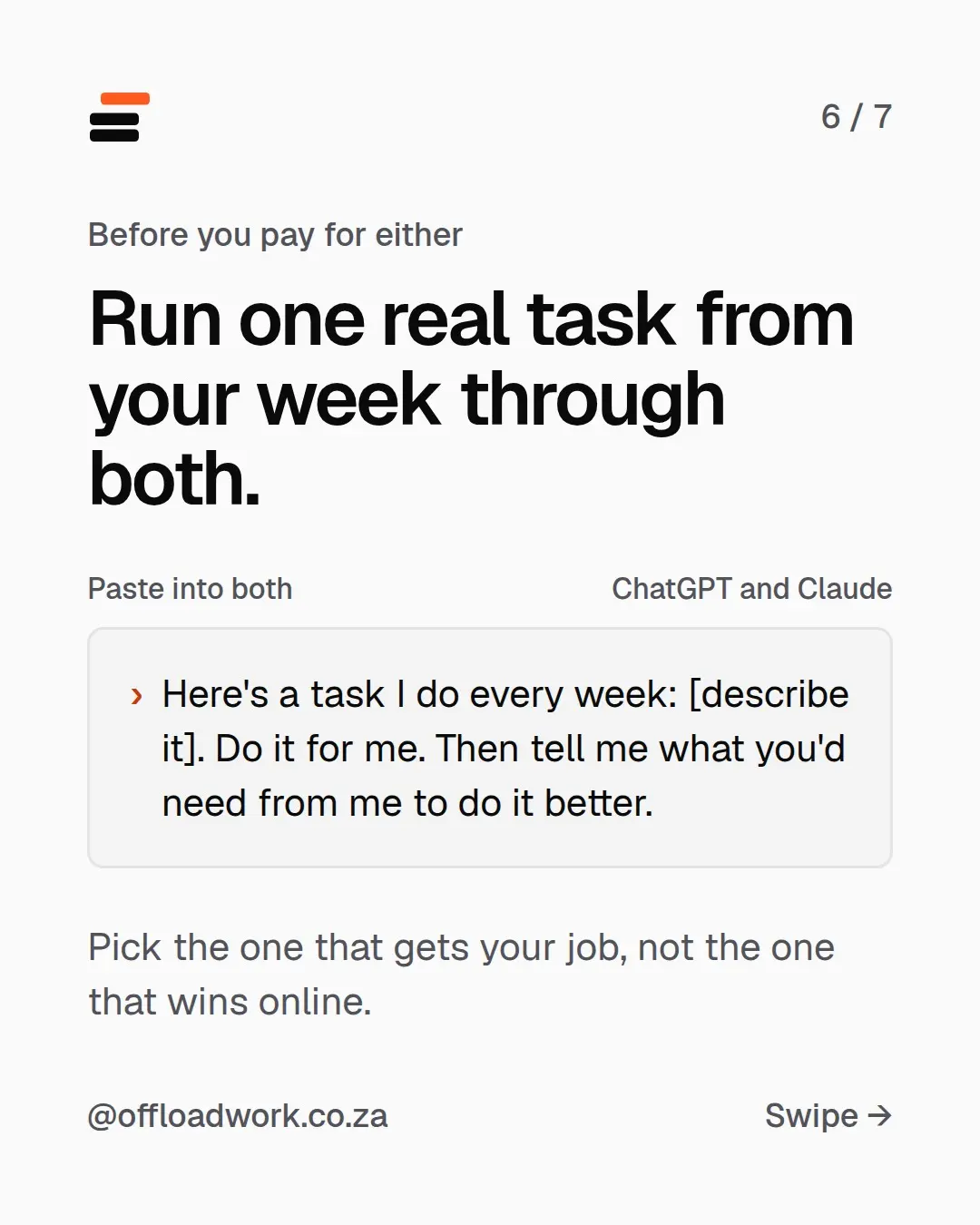
Before you pay for either: run one real task through both
Don’t pick the one that wins online. Pick the one that gets your job. It takes five minutes.
1. Choose a task you do every week
A weekly report, a client update, meeting notes, a quote. Something real, with real details.
2. Paste this into both ChatGPT and Claude
Here's a task I do every week: [describe it]. Do it for me. Then tell me what you'd need from me to do it better.
3. Compare three things
- Which answer needed less fixing? That’s time saved every week.
- Which one asked the better follow-up questions? That’s the one that understands your work.
- Which one sounded like you? You’ll use the one you don’t have to rewrite.
The second half of the prompt (“tell me what you’d need”) is the part most people skip. It shows you what to give it next time, and you can save those details once so you never type them again: make ChatGPT and Claude remember who you are.
Whichever one you pick, set it up for your job
The tool matters less than the setup. A well-briefed free plan beats a paid plan that knows nothing about you. Three things make the biggest difference:
- Tell it who you are, once. Custom instructions (ChatGPT) or personal preferences (Claude) carry your job, your tone and your country into every chat. Here’s how to set that up.
- Keep repeat work in a Project. Your template, a good example and your rules, ready every time. How to use Projects.
- Brief it like a colleague. Who you are, who it’s for, what format you want. The three changes that fix most bad answers.
The free AI guide walks you through all of this step by step, with the exact settings to tap. No tech skills needed. If you’d rather have it done with you, one-on-one setups do it around your actual week.
More honest comparisons are in Tested for you.
Questions
Is Claude better than ChatGPT?
In this one test, Claude won 4 of 5 everyday tasks, mostly because it went deeper. ChatGPT won when a short, simple answer was what the person needed. Neither is better at everything, so test both on your own work.
Which one should I pay for?
Neither, until you've run one real task from your week through both on the free plans. Pay for the one that gets your job, and only if you'll use it every week.
Can I use both?
Yes. Plenty of people keep one for writing and planning and the other for quick answers. The prompts on this site work in both.
Who ran the test?
Tom's Guide, a tech review site. It was published on 24 September 2026, using GPT-6 Astra in ChatGPT and Opus 5.5 in Claude.