Will AI take my job? What the '1 in 5 office jobs' report says
Will AI take my job? The '1 in 5 office jobs' headline is the most extreme of three scenarios in one report. What it says, who it covers and what to do this week.
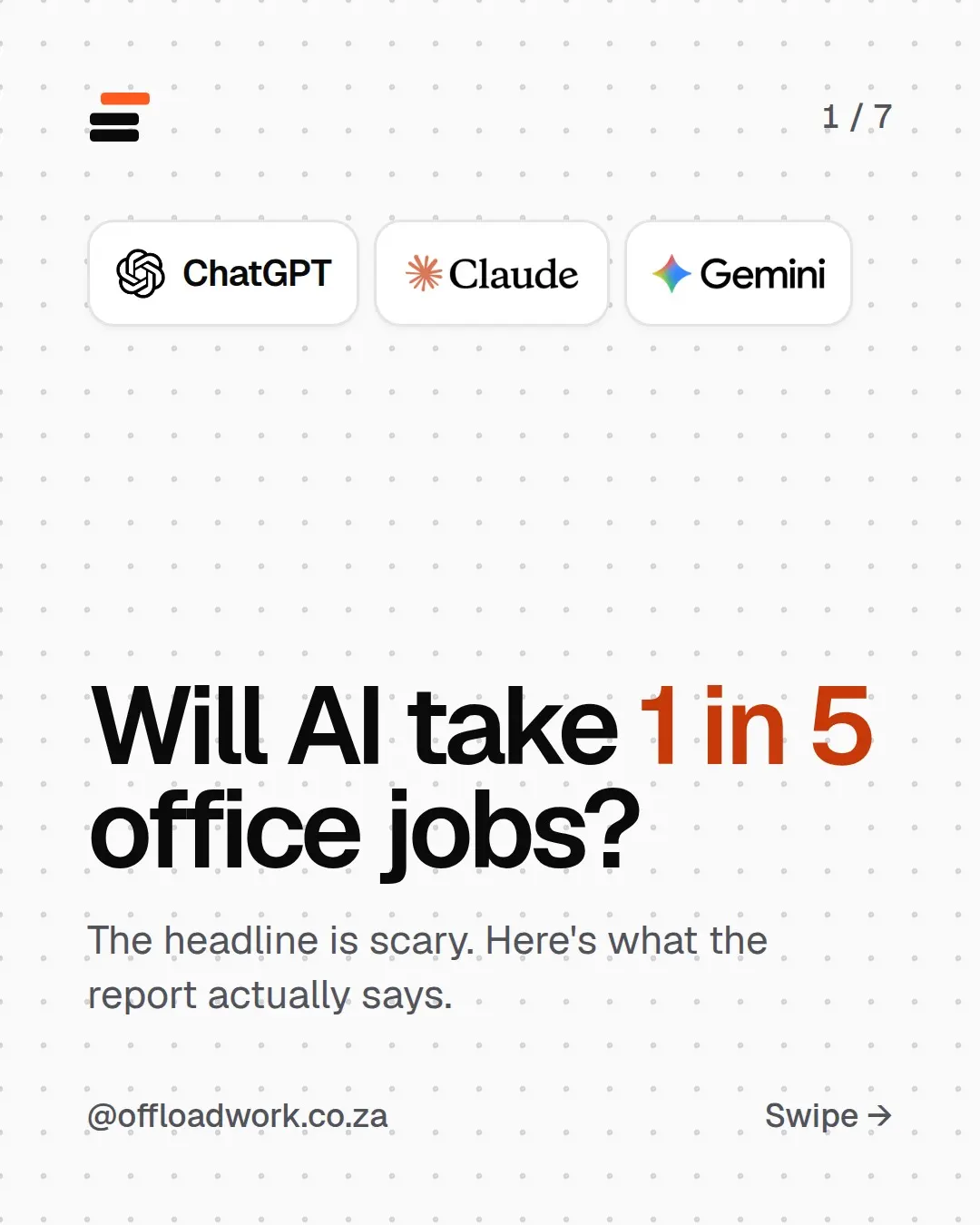
Will AI take 1 in 5 office jobs? That’s the headline, but it’s the worst of three scenarios in one report, not a forecast. The report puts unemployment among knowledge workers at 17.9% by 2030 only in its most extreme case. It’s about what could happen. So if you’re asking “will AI take my job?”, the useful response isn’t panic. It’s becoming the person in your office who knows how to use AI.
Where the number comes from
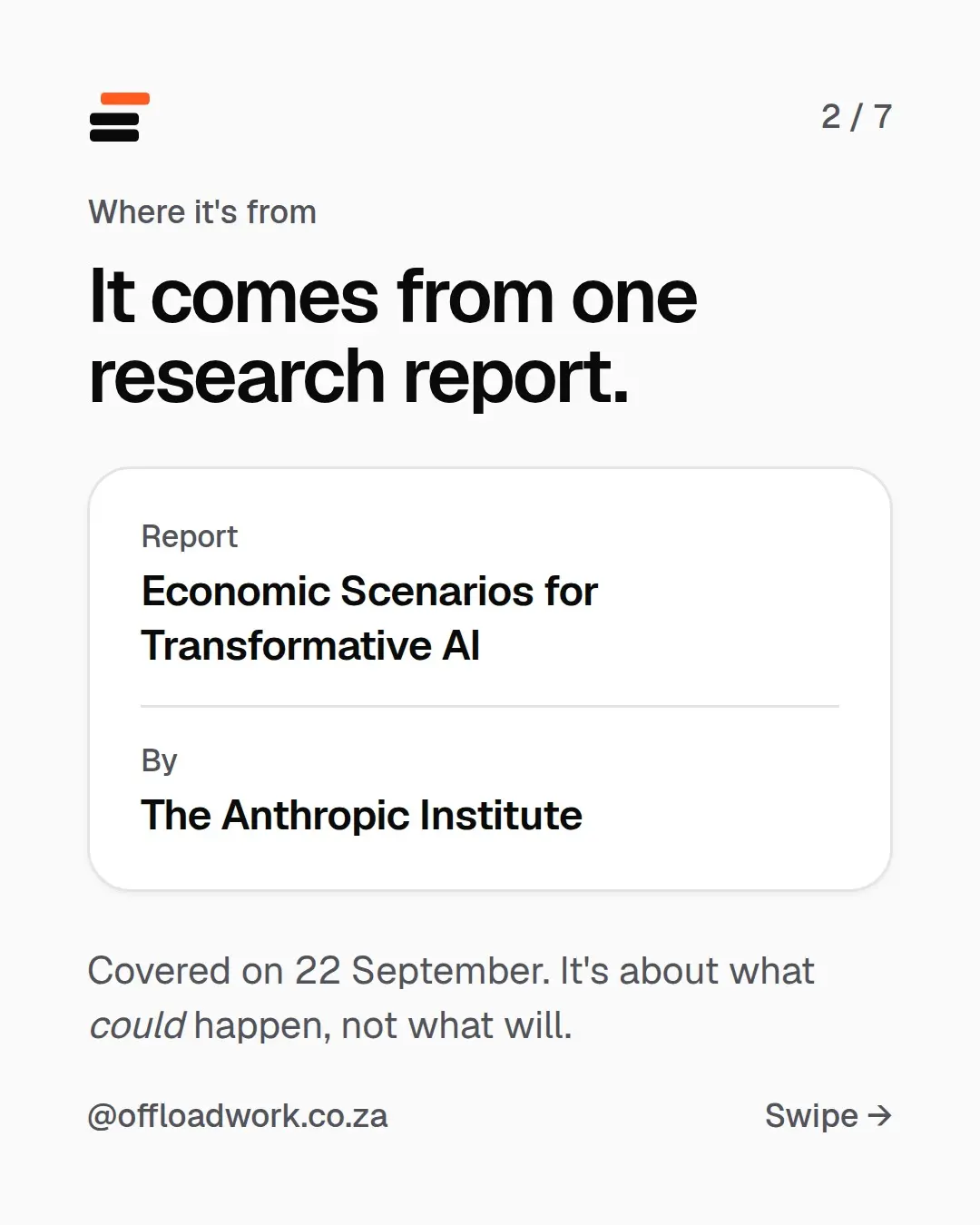
The “1 in 5” figure traces back to one research report:
- Report: Economic Scenarios for Transformative AI
- By: the Anthropic Institute
- Published: September 2026
It’s a scenarios report. Instead of predicting one future, it lays out several possible ones and works through what each would mean. That’s a normal, sensible way to think about something uncertain. It’s also easy to turn into a scary headline.
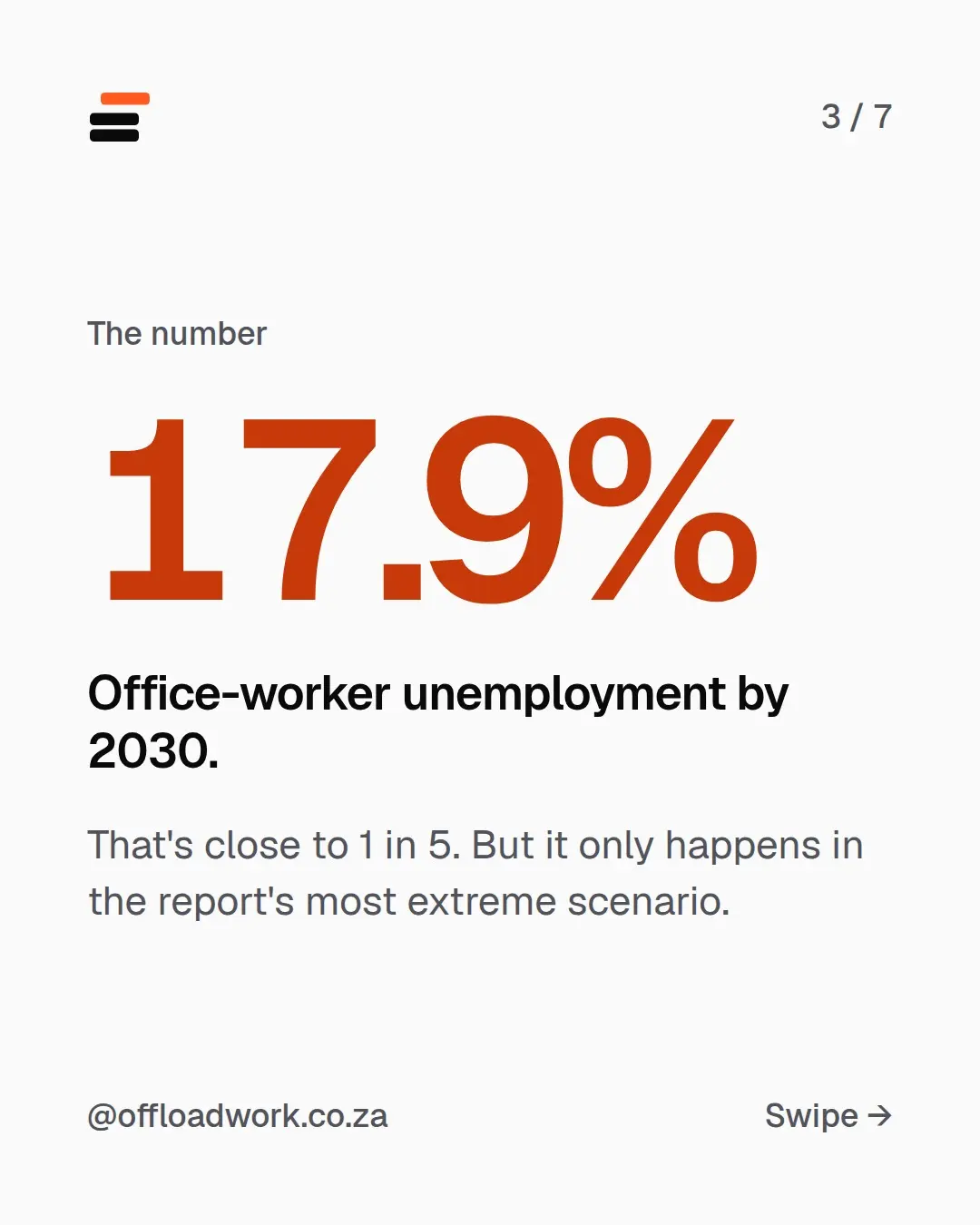
The number: 17.9%
The figure behind the headline is 17.9% unemployment among knowledge workers by 2030. That’s close to 1 in 5.
Across the whole economy, the same scenario puts unemployment at 11.9%. The headline uses the bigger number.
But it only happens in the report’s most extreme scenario. Read on its own, “1 in 5 office jobs” sounds like a prediction. In the report, it’s the far end of a range.
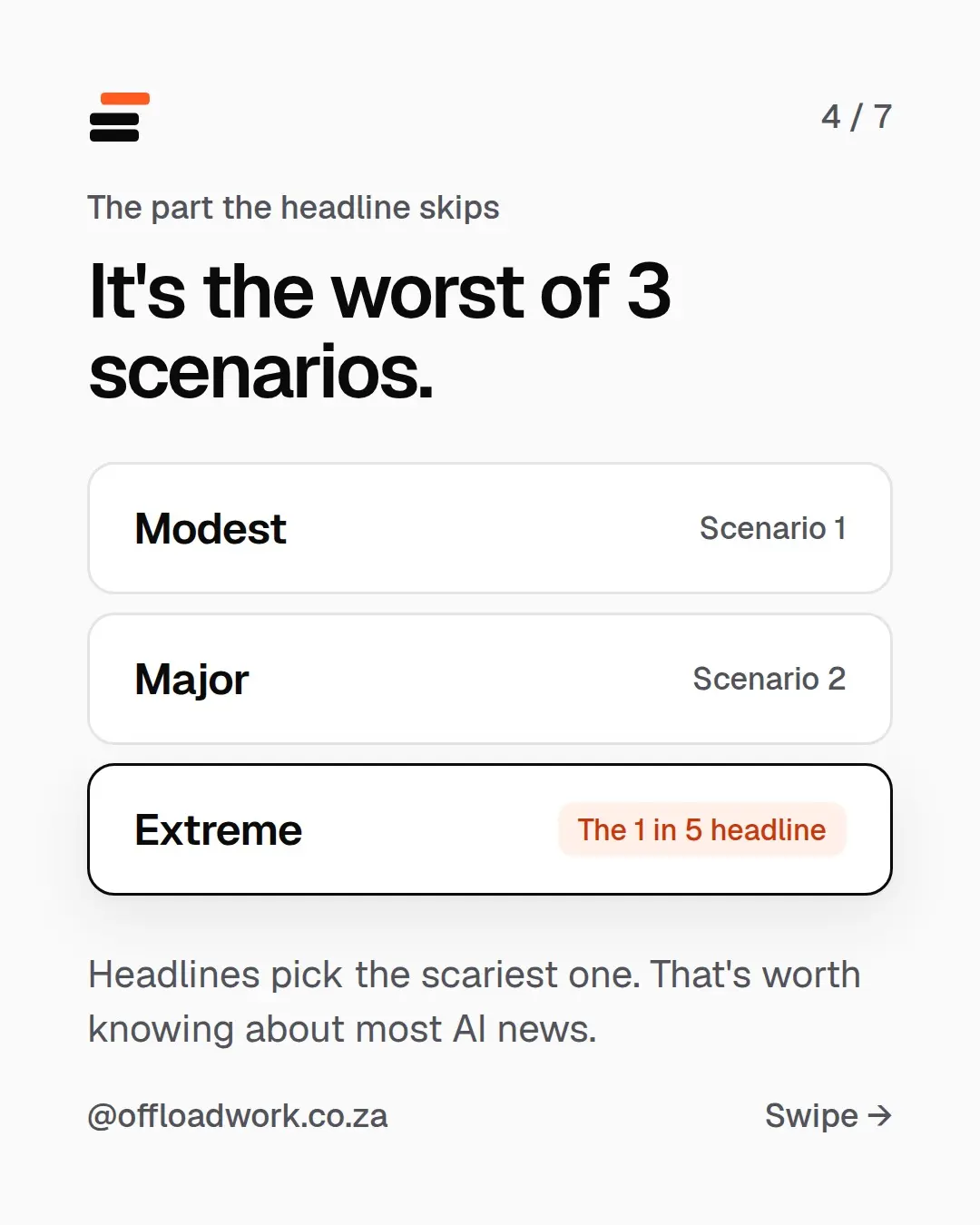
The part the headline skips: it’s the worst of 3 scenarios
The report works through three scenarios:
| Scenario | What it is |
|---|---|
| 1. Modest | The mildest case |
| 2. Substantial | The middle case |
| 3. Extreme | Where the “1 in 5” headline comes from |
Headlines pick the scariest one. That’s worth knowing about most AI news: the number that travels furthest is rarely the likeliest one. When you see a big AI jobs statistic, ask two questions. Which scenario is this? And is it about what could happen, or what will?
Want AI news explained without the panic? The Offload newsletter takes one AI update a week and says what it means for your job, in plain words. Two minutes to read.
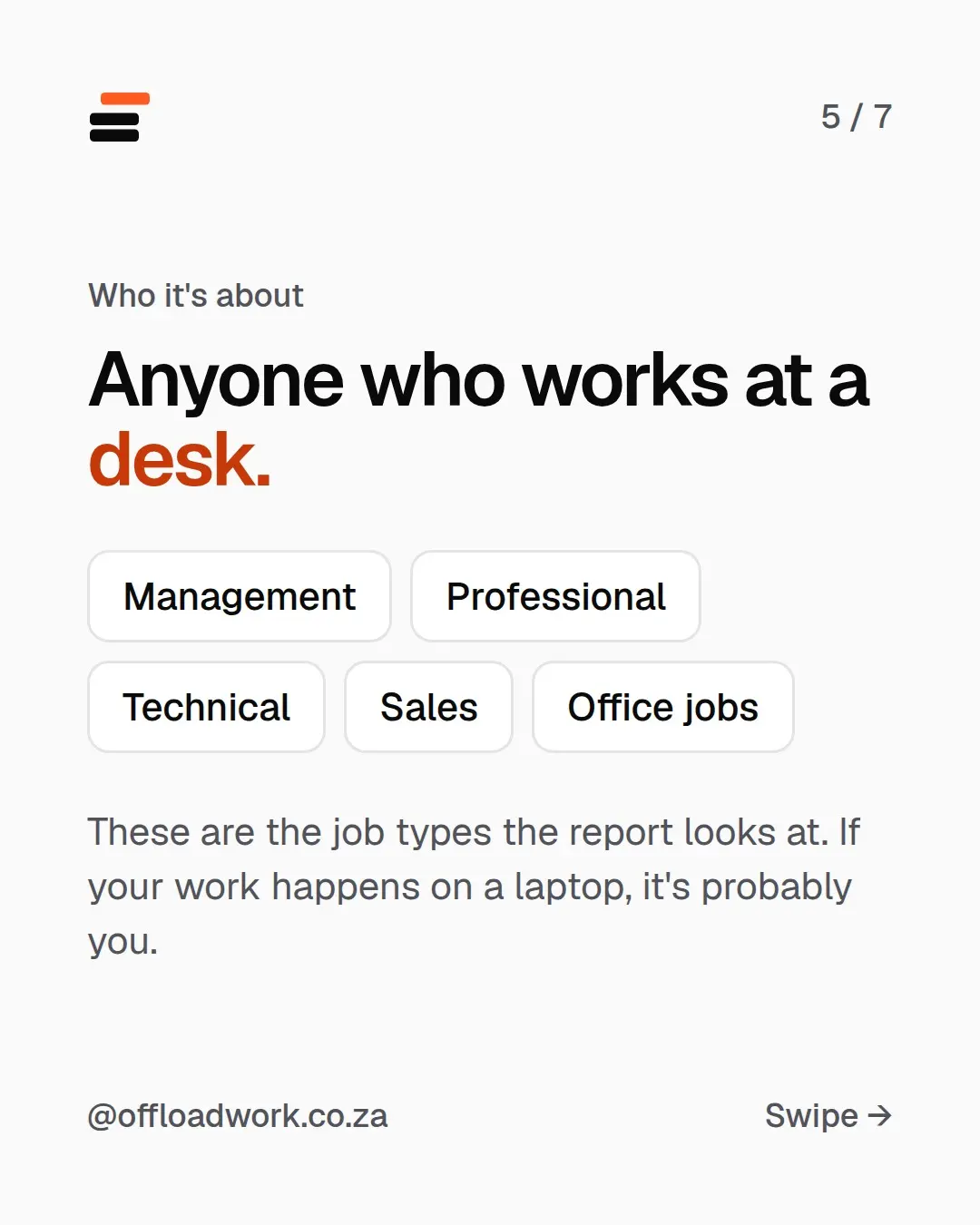
Who it’s about: anyone who works at a desk
The report splits workers into two groups: knowledge workers and everyone else. Its examples of knowledge work include coders, call centre agents and, maybe surprisingly, nurses. Electricians and construction workers sit in the other group.
If your work happens on a laptop (email, documents, spreadsheets, meetings), it’s probably you. That covers most people reading this, from office managers and bookkeepers to HR, sales reps and team leads.
What to do about it: be the person who knows how to use it
Not a coder. Just someone who hands off the busywork and checks what comes back. You can start this week, on the free plans.
This week: take back one hour
Pick the most repetitive thing you do and hand it over. The easiest wins are meeting notes, awkward emails, long documents and your to-do list. Five copy-paste prompts for exactly those.
Next: stop getting generic answers
Most people give up on AI because the answers feel generic. That’s usually the prompt, not the tool. Three small changes make the answers useful for your actual job.
Then: set it up so it knows your job
- Tell it who you are, once, so every chat starts off knowing your role, your tone and your country. Five-minute setup.
- Put repeat work in a Project, like the monthly report, with your template already inside. How Projects work.
- Connect your email and calendar, so it preps your meetings and drafts replies for you to check. Here’s how.
Each of these makes you faster at the job you already have. That’s the skill the scary headlines are really about.
The honest bottom line
Nobody knows exactly what AI will do to office work by 2030, including the people who write the reports. That’s why they write scenarios. What’s certain is that people who use AI well will get through their work faster than people who don’t, whichever scenario turns up.
Start learning it this week. It’s free. The free AI guide takes you through the basics, set up for the job you actually do. If you’d like it done with you, one-on-one setups build it around your week. More AI news, translated for normal people, is in AI news, translated.
Questions
Will AI take my job?
Nobody knows for sure. The '1 in 5' headline comes from the most extreme of three scenarios in one report, about what could happen by 2030, not what will. What you can control is how well you use AI in the job you have.
Which jobs does the report look at?
It splits workers into knowledge workers (jobs like coders, call centre agents and nurses) and everyone else. If most of your work happens at a desk or on a laptop, it's probably about you.
Where does the 17.9% figure come from?
A report called 'Economic Scenarios for Transformative AI' by the Anthropic Institute, published in September 2026. 17.9% is unemployment among knowledge workers by 2030 in its most extreme scenario. Across the whole economy, that scenario puts it at 11.9%.
Do I need to learn to code to stay safe?
No. The useful skill is handing routine work to AI and checking what comes back. That starts with a few settings and better prompts, not code.